Conference Dates
November 23-25, 2026
The International Conference on Agriculture & Horticulture (ICAH 2026) is a premier global platform dedicated to advancing knowledge, innovation, and collaboration across the agricultural and horticultural sciences. Scheduled for November 23–25, 2026, in Singapore with a robust online participation option, ICAH 2026 brings together researchers, academicians, industry professionals, policymakers, agribusiness leaders, and young scientists from around the world. The conference is designed to foster meaningful dialogue, showcase cutting-edge research, and bridge the gap between scientific discovery and practical application in sustainable food and plant systems.
Guided by the theme “Cultivating Innovation in Agriculture and Horticulture,” ICAH 2026 focuses on transformative solutions that address global challenges such as food security, climate change, resource efficiency, and sustainable rural development. The scientific program will feature keynote lectures, plenary sessions, oral and poster presentations, panel discussions, and interactive workshops covering diverse areas including crop science, horticultural innovations, precision agriculture, agri-biotechnology, soil and water management, post-harvest technologies, smart farming, and sustainable agri-food systems. By highlighting interdisciplinary approaches and emerging technologies, the conference aims to inspire innovative thinking and collaborative problem-solving.
Advances in Agriculture, Horticulture, and Crop Sciences focuses on emerging scientific, technological, and management innovations aimed at improving productivity, quality, and sustainability across agricultural and horticultural systems. This session explores recent progress in crop science, horticultural practices, and agricultural research, emphasizing improved cultivation techniques, crop diversification, and efficient resource utilization. Key topics include advances in plant breeding, crop physiology, integrated nutrient and water management, and the use of modern tools such as precision agriculture, remote sensing, and data-driven decision support systems. These approaches collectively enhance crop performance while minimizing environmental impact.
The second part of the session highlights applied research and translational innovations that bridge science and practice. Topics include climate-resilient agriculture, sustainable horticulture, protected cultivation, and post-harvest technologies that improve shelf life and reduce losses. Discussions will also address value addition, supply chain optimization, and integration of digital technologies to support farmers and agri-industries. By combining advances in agriculture, horticulture, and crop sciences, this session provides a comprehensive platform for developing resilient, efficient, and sustainable food production systems capable of meeting future global demands.
Key Highlights
Why This Session Is Important?
Advances in agriculture, horticulture, and crop sciences are essential for ensuring food security, nutritional quality, and environmental sustainability. This session addresses the need to increase productivity while conserving natural resources and adapting to climate change. By fostering innovation and interdisciplinary collaboration, it supports the development of resilient cropping systems, sustainable livelihoods, and future-ready agricultural practices worldwide.
Sustainable Agronomy and Crop Production Systems focuses on designing and managing agricultural systems that balance productivity, environmental protection, and long-term resource conservation. This session explores the scientific foundations of sustainable agronomy, including cropping system design, crop rotation, intercropping, and soil conservation practices that enhance soil fertility and ecosystem stability. Emphasis will be placed on soil health, nutrient cycling, and water-use efficiency, highlighting how agronomic decisions influence crop growth, yield stability, and environmental outcomes. Advances in agronomic research, field-based experimentation, and system-level modeling will be discussed to demonstrate best practices for sustainable crop production across diverse agroecological regions.
The second part of the session highlights integrated and technology-enabled approaches for improving crop production systems under increasing climate and resource constraints. Topics include integrated nutrient and pest management, climate-resilient agronomic practices, and the use of precision agriculture tools to optimize inputs and reduce environmental footprints. Discussions will also address conservation agriculture, sustainable intensification, and the role of policy and socio-economic factors in adopting sustainable practices at scale. By integrating ecological principles with modern agronomic technologies, this session provides a comprehensive framework for building resilient, efficient, and environmentally responsible crop production systems that support food security and sustainable rural development.
Key Highlights
Why This Session Is Important?
Sustainable agronomy is essential for meeting future food demands while preserving soil, water, and biodiversity resources. This session addresses the need to transition from input-intensive practices to resource-efficient, climate-resilient crop production systems. By combining agronomic science with sustainability principles, the session supports long-term agricultural productivity, environmental stewardship, and global food security.
Horticultural Sciences: Olericulture, Pomology & Floriculture focuses on scientific and technological advances in the cultivation, improvement, and management of vegetable, fruit, and ornamental crops. This session explores crop-specific principles of olericulture, pomology, and floriculture, emphasizing plant growth, flowering, fruiting, yield optimization, and quality enhancement. Topics include crop physiology, varietal improvement, planting systems, nutrient and water management, and protected cultivation practices that enhance productivity and resource-use efficiency. Advances in horticultural research, precision cultivation, and sustainable input management will be discussed to address the increasing demand for high-quality horticultural produce.
The second part of the session highlights applied innovations and industry-oriented perspectives in horticultural sciences. Topics include orchard management systems, high-value vegetable production, cut flower and ornamental plant technologies, and post-harvest strategies to extend shelf life and reduce losses. Discussions will also address climate-resilient horticulture, integrated pest and disease management, and value addition through processing and supply chain optimization. By integrating scientific principles with practical applications, this session provides a comprehensive platform for advancing sustainable horticulture that supports nutrition security, economic growth, and diversification of agricultural systems.
Key Highlights
Why This Session Is Important?
Horticultural crops play a vital role in nutrition security, income generation, and agricultural diversification. Advancements in olericulture, pomology, and floriculture are essential for improving productivity, quality, and sustainability under changing climatic conditions. This session supports the adoption of science-based horticultural practices that enhance farmer livelihoods, reduce post-harvest losses, and strengthen resilient food and ornamental plant production systems.
Plant Physiology, Growth Regulation, and Stress Biology focuses on the physiological and molecular processes that govern plant growth, development, and adaptation to environmental challenges. This session explores core aspects of plant physiology, including photosynthesis, respiration, nutrient assimilation, and water relations, emphasizing how these processes are coordinated through plant growth regulators and hormonal signaling networks. Special attention will be given to mechanisms of growth regulation, source–sink dynamics, and metabolic control that determine plant productivity and biomass allocation. Advances in physiological measurements, molecular tools, and integrative approaches will be discussed to understand how plants balance growth and survival.
The second part of the session highlights plant responses to abiotic and biotic stresses, focusing on physiological, biochemical, and molecular adaptations. Topics include stress perception and signaling, osmotic adjustment, redox regulation, and antioxidant defense systems that protect cellular functions under stress conditions. Discussions will also address growth–defense trade-offs, stress memory, and acclimation processes. By linking fundamental physiology with stress biology, this session provides insights into developing stress-resilient crops capable of maintaining productivity under adverse environmental conditions.
Key Highlights
Why This Session Is Important?
Understanding how plants regulate growth and respond to stress is essential for improving crop productivity and stability in changing environments. This session provides a physiological framework for developing crops with enhanced stress tolerance, resource-use efficiency, and yield stability, supporting sustainable agriculture and long-term food security.
Crop Breeding, Seed Science, and Genetic Improvement focuses on developing superior crop varieties through integrated genetic, breeding, and seed technologies. This session explores the scientific foundations of crop breeding, including selection strategies, inheritance of complex traits, and the use of conventional and molecular breeding tools to enhance yield, quality, and adaptability. Emphasis will be placed on genetic improvement for resistance to biotic and abiotic stresses, nutritional enhancement, and resource-use efficiency. Advances in genomics, marker-assisted selection, and genomic selection will be discussed to illustrate how modern breeding accelerates genetic gains.
The second part of the session highlights the critical role of seed science in translating genetic improvements into field performance. Topics include seed development, vigor, quality testing, and seed production systems that ensure genetic purity and uniform crop establishment. Discussions will also address hybrid seed technology, seed certification, intellectual property rights, and efficient seed systems that support large-scale adoption of improved varieties. By integrating breeding innovation with robust seed technologies, this session provides a comprehensive framework for delivering high-performing, climate-resilient crops that contribute to sustainable agriculture and global food security.
Key Highlights
Why This Session Is Important?
Crop breeding and seed science are central to improving agricultural productivity and resilience. Genetic improvement combined with high-quality seed systems ensures that innovations reach farmers effectively. This session supports the development and dissemination of improved crop varieties that enhance yield stability, nutritional quality, and climate adaptability, addressing global challenges in food security and sustainable agriculture.
Plant Biotechnology, Genomics, and Molecular Breeding focuses on the integration of advanced biotechnological tools with genomic knowledge to accelerate crop improvement. This session explores how plant biotechnology and genomics enable the identification, characterization, and manipulation of genes controlling important agronomic traits. Emphasis will be placed on genome sequencing, functional genomics, gene expression analysis, and the use of molecular markers to understand genetic variation and trait inheritance. Advances in omics technologies, bioinformatics, and high-throughput genotyping will be discussed to illustrate how large-scale genomic data are transforming plant breeding and genetic improvement.
The second part of the session highlights applied approaches in molecular breeding that bridge laboratory research and field-level outcomes. Topics include marker-assisted selection, genomic selection, and the application of genome editing technologies to enhance yield, quality, and resistance to biotic and abiotic stresses. Discussions will also address strategies for breeding climate-resilient, nutrient-efficient crops and integrating genomic tools into conventional breeding pipelines. By combining biotechnology, genomics, and breeding science, this session provides a comprehensive framework for developing high-performing crop varieties that support sustainable agriculture and global food security.
Key Highlights
Why This Session Is Important?
Plant biotechnology, genomics, and molecular breeding are essential for accelerating genetic gains in crops under increasing climate and resource constraints. By enabling precise and data-driven improvement of complex traits, this integrated approach shortens breeding cycles and enhances selection accuracy. This session supports innovation in sustainable crop production, food security, and climate adaptation, ensuring that modern breeding technologies deliver tangible benefits to agriculture and society.
Bioinformatics, AI, and Computational Agriculture focuses on data-driven approaches that transform agricultural research and decision-making. This session explores how bioinformatics tools enable the analysis and integration of large-scale genomic, transcriptomic, proteomic, and metabolomic datasets to uncover gene–trait relationships and biological mechanisms underlying crop performance. Emphasis will be placed on computational pipelines, statistical modeling, and data integration frameworks that convert complex biological data into actionable insights. Advances in data standards, cloud computing, and reproducible workflows will be discussed to support scalable and collaborative agricultural research.
The second part of the session highlights applied uses of AI and machine learning across agricultural systems. Topics include predictive analytics for yield and stress responses, AI-powered disease and pest detection, and digital phenotyping using imaging, sensors, and drones. Discussions will also cover decision support systems, remote sensing, and spatial analytics for precision input management and risk assessment. Challenges related to data quality, bias, interpretability, and responsible AI deployment will be addressed. By integrating computational science with agronomy and biology, this session demonstrates how digital technologies enhance productivity, sustainability, and resilience in modern agriculture.
Key Highlights
Why This Session Is Important?
The future of agriculture depends on the ability to harness and interpret vast, complex datasets. Bioinformatics, AI, and computational approaches enable faster discovery, precise decision-making, and efficient resource use. This session equips researchers, agronomists, and practitioners with the digital tools needed to advance sustainable agriculture, improve food security, and build resilient farming systems in a data-driven world.
Plant–Microbe Interactions and Soil Microbiome Engineering focuses on the complex biological relationships between plants and the diverse microbial communities inhabiting the soil and plant tissues. This session explores the molecular, biochemical, and ecological mechanisms through which plants interact with beneficial and pathogenic microorganisms. Emphasis will be placed on rhizosphere processes, root exudation patterns, and microbial colonization that influence nutrient availability, growth regulation, and plant health. Advances in metagenomics, metatranscriptomics, and systems-level analyses will be discussed to understand how microbial communities assemble, function, and respond to environmental and agricultural practices.
The second part of the session highlights emerging strategies in soil microbiome engineering aimed at improving crop productivity and resilience. Topics include manipulation of beneficial microbial consortia, microbiome-assisted nutrient acquisition, and enhancement of plant tolerance to abiotic stresses such as drought, salinity, and nutrient limitation. Discussions will also address microbial signaling networks, microbiome stability, and the use of bioinoculants and synthetic microbial communities for sustainable crop management. By integrating molecular plant biology, microbial ecology, and applied biotechnology, this session provides a forward-looking perspective on harnessing soil microbiomes to support sustainable agriculture and ecosystem health.
Key Highlights
Why This Session Is Important?
Soil microorganisms are central to plant nutrition, stress resilience, and ecosystem sustainability. Understanding and engineering plant–microbe interactions enable the development of microbiome-based solutions that reduce chemical inputs, improve soil health, and enhance crop productivity. This session supports innovative approaches for sustainable agriculture, climate adaptation, and long-term food security through responsible manipulation of soil microbial ecosystems.


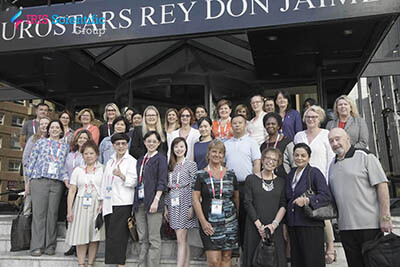
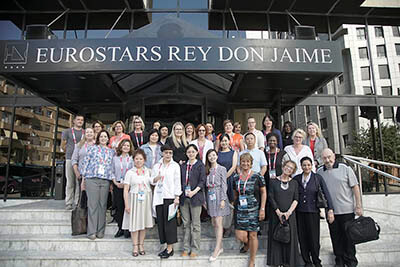
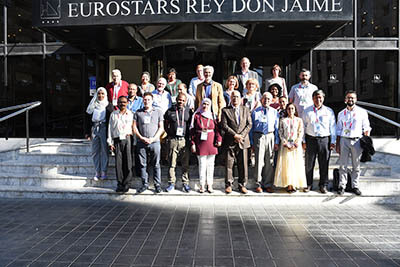
Iris Scientific Group takes great pride in announcing the successful outcome of the World Health Care and Nursing Conference (WHCN 2019) which was held in Valencia, Spain from September 23-25, 2019.
For WHCN 2019 Final Program: Click here
For WHCN 2019 Proceedings: Click Here
For WHCN 2019 Gallery: Click Here
In 2019 we were honored with the presence of renowned session leaders and keynote speakers worldwide. We want to thank the scientific committee for their dedicated participation, intellectual expertise, and their high-quality presentations.
Organizing Committee of WHCN 2019:
The Organizing Committee would like to thank the moderators Angela O'Connor, King Edward Memorial Hospital, Australia, and Carrinna A. Hansen, University of Copenhagen, Denmark for their contribution which ensued in the smooth functioning of the conference.
Iris Scientific Group is prerogative to thank the Organizing Committee Members, Keynote speakers; Chairs on engross the plenary sessions, workshops, and special sessions in an expanded manner to make this conference a privileged.
Nursing Conference 2019 Keynote Speakers:
Nursing Conference Speakers:
Nursing Conference 2019 Workshops:
Cynthia Horton, Cecil College, USA
Merita Kaunisto, Kuopio University Hospital, Finland
Hanna-Mari Nevala, Savonia University of Applied Sciences, Finland
Tiina Arpola, Savonia University of Applied Sciences, Finland
Nursing Conference 2019 Poster Presenters:
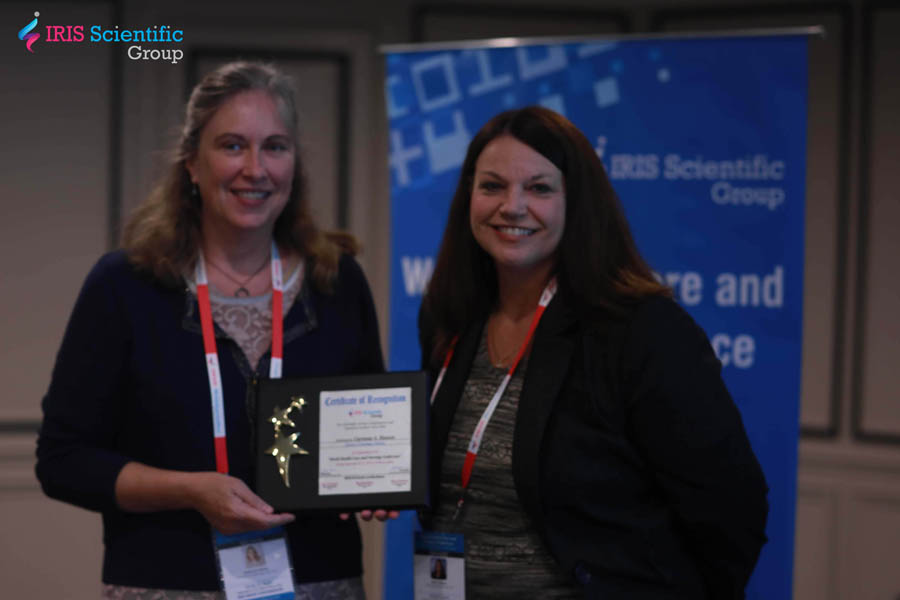
We congratulate the Best poster award winner Chantira Chiaranai, Suranaree University of Technology, Thailand. We would also like to thank Cynthia Horton, Cecil College, USA who supported us by evaluating the posters.
We thank all the participants for their magnificent contribution towards the event which facilitated us for the successful accomplishment of this event.
We greatly hope to see you again, with added vigor and with your other colleagues in "3rd International Nursing Networking Conference (INNC-2025)" during April 23-25, 2025, at Las Vegas, USA, and in Virtual format.
Iris Scientific Group takes great pride in announcing the successful outcome of the World Catalysis and Chemical Engineering Network Congress (WCCN 2025) which was held in Virtual Mode from April 23-25, 2025.
For WCCN 2025 Final Program: Click Here
In 2025 we were honored with the presence of renowned session leaders and keynote speakers worldwide. We want to thank the scientific committee for their dedicated participation, intellectual expertise, and their high-quality presentations.
Organizing Committee of WCCN 2025:
The Organizing Committee would like to thank the moderators Maria Jose Lavorante, Institution of Scientific and Technological Research for Defense, Argentina and Rahul Hajare, Sandip University, India for their contribution which ensued in the smooth functioning of the conference.
Iris Scientific Group is prerogative to thank the Organizing Committee Members, Keynote speakers; Chairs on engross the plenary sessions, workshops, and special sessions in an expanded manner to make this conference a privileged.
WCCN 2025 Keynote Speakers:
WCCN 2025 Plenary Speakers:
WCCN 2025 Speakers:
We thank all the participants for their magnificent contribution towards the event which facilitated us for the successful accomplishment of this event.
We greatly hope to see you again, with added vigor and with your other colleagues in “2nd World Catalysis and Chemical Engineering Network Congress (WCCN 2026)” during April 22-24, 2026. WCCN 2026 will be a hybrid event, offering both in-person and virtual participation options, allowing attendees to engage from anywhere in the world.
Iris Scientific Group takes great pride in announcing the successful outcome of the 3rd International Nursing Networking Conference (INNC 2025) which was held in Virtual Mode from April 23-25, 2025.
For INNC 2025 Final Program: Click Here
In 2025 we were honored with the presence of renowned session leaders and keynote speakers worldwide. We want to thank the scientific committee for their dedicated participation, intellectual expertise, and their high-quality presentations.
Organizing Committee of INNC 2025:
The Organizing Committee would like to thank the moderators Sofica Bistriceanu, Academic Medical Unit - CMI, Romania, and Anum Fatima, Chiang Mai University, Thailand for their contribution which ensued in the smooth functioning of the conference.
Iris Scientific Group is prerogative to thank the Organizing Committee Members, Keynote speakers; Chairs on engross the plenary sessions, workshops, and special sessions in an expanded manner to make this conference a privileged.
INNC 2025 Keynote Speakers:
INNC 2025 Speakers:
INNC 2025 Poster Presenters:
We thank all the participants for their magnificent contribution towards the event which facilitated us for the successful accomplishment of this event.
We greatly hope to see you again, with added vigor and with your other colleagues in “4th International Nursing Networking Conference (INNC 2026)” during April 13-15, 2026. INNC 2026 will be a hybrid event, offering both in-person and virtual participation options, allowing attendees to engage from anywhere in the world.
Iris Scientific Group takes great pride in announcing the successful outcome of the International Cancer Conference (ICC 2025) which was held in Virtual Mode from November 27-29, 2025.
For ICC 2025 Final Program: Click Here
In 2025 we were honored with the presence of renowned session leaders and keynote speakers worldwide. We want to thank the scientific committee for their dedicated participation, intellectual expertise, and their high-quality presentations.
Organizing Committee of ICC 2025:
The Organizing Committee would like to thank the moderators Don Mathew, Pacific Medical College & Hospital, India for his contribution which ensued in the smooth functioning of the conference.
Iris Scientific Group is prerogative to thank the Organizing Committee Members, Keynote speakers; Chairs on engross the plenary sessions, workshops, and special sessions in an expanded manner to make this conference a privileged.
ICC 2025 Keynote Speakers:
ICC 2025 Speakers:
We thank all the participants for their magnificent contribution towards the event which facilitated us for the successful accomplishment of this event.
We greatly hope to see you again, with added vigor and with your other colleagues in “2nd Edition of International Cancer Conference (ICC 2026)” during November 09-11, 2026. ICC 2026 will be a hybrid event, offering both in-person and virtual participation options, allowing attendees to engage from anywhere in the world.
Iris Scientific Group takes great pride in announcing the successful outcome of the Global Conference on Material Science and Nanotechnology (GCMN 2025) which was held in Virtual Mode from April 28-30, 2025.
For GCMN 2025 Final Program: Click Here
In 2025 we were honored with the presence of renowned session leaders and keynote speakers worldwide. We want to thank the scientific committee for their dedicated participation, intellectual expertise, and their high-quality presentations.
Organizing Committee of GCMN 2025:
The Organizing Committee would like to thank the moderators Santoshi Misra, St. Ann's College for women, India for her contribution which ensued in the smooth functioning of the conference.
Iris Scientific Group is prerogative to thank the Organizing Committee Members, Keynote speakers; Chairs on engross the plenary sessions, workshops, and special sessions in an expanded manner to make this conference a privileged.
GCMN 2025 Keynote Speakers:
GCMN 2025 Plenary Speakers:
GCMN 2025 Speakers:
GCMN 2025 Poster Presenters:
We thank all the participants for their magnificent contribution towards the event which facilitated us for the successful accomplishment of this event.
We greatly hope to see you again, with added vigor and with your other colleagues in “2nd Global Conference on Material Science and Nanotechnology (GCMN 2026)” during April 13-15, 2026.
GCMN 2026 will be a hybrid event, offering both in-person and virtual participation options, allowing attendees to engage from anywhere in the world.










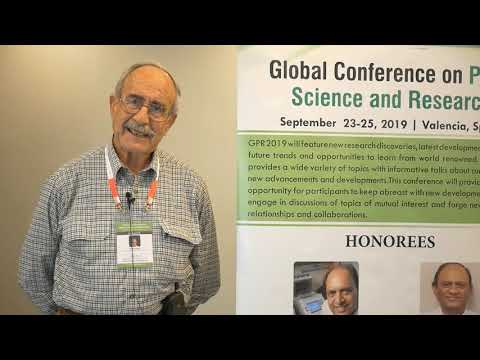
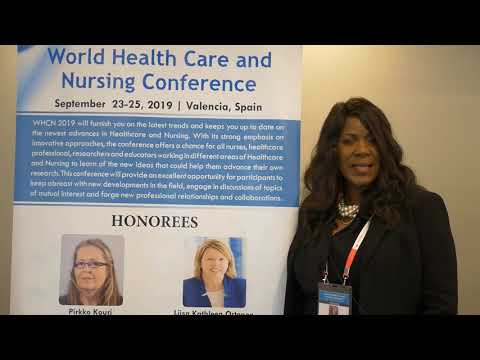
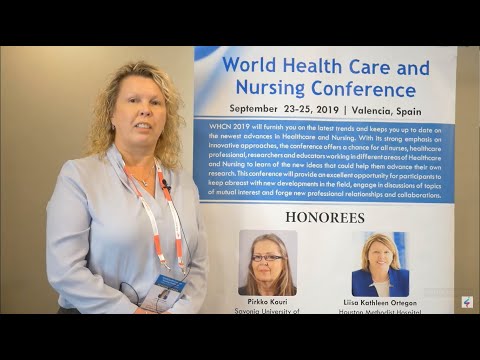
Thank YOU! For a wonderful experience. I met so many amazing people from all over the world and many of us bonded going forward. All the presentations were full of new and exciting things to hear and the hotel was just lovely. I enjoyed every minute.
 Penny Daugherty
Northside Hospital Cancer Institute, USA
Penny Daugherty
Northside Hospital Cancer Institute, USA
I met some extraordinary nurses from all over and was so impressed with their work
 Elaine Clear
St Vincent's University Hospital, Ireland
Elaine Clear
St Vincent's University Hospital, Ireland
Such a distinguished conference and the entire magnificent organization
 Elena Baixauli Gallego
University of Valencia, Spain
Elena Baixauli Gallego
University of Valencia, Spain
Overall, the Conference was a success. Interesting topics and excellent speakers
 Elvessa Narvasa
Canadian Council of Cardiovascular Nurses, Canada
Elvessa Narvasa
Canadian Council of Cardiovascular Nurses, Canada
Thank you very much for a nice and interesting conference in Valencia, I really enjoyed it!
 Carrinna A. Hansen
University of Copenhagen, Denmark
Carrinna A. Hansen
University of Copenhagen, Denmark
The conference added value to me on medical robots as I would like to apply them to Zambia.
 Margaret C. Maimbolwa
University of Zambia, Zambia
Margaret C. Maimbolwa
University of Zambia, Zambia
An amazing scientifically enriching continued professional development meaningful experience with a brilliant platform for dynamic collaborations with interactive discussions and expert opinion-insights offering fascinating translational/public health avenues for evidence-based novel immunotherapy regimens and eventual design of predictive biomarkers for cost-effective disease management of inflammatory diseases with emphasis on evidence-based health management viz. gynecologic disorders/diseases in women of diverse genetic landscapes and lifestyles.
 Saumya Pandey
Indira IVF Hospital, India
Saumya Pandey
Indira IVF Hospital, India
The INNC platform provides information from various fields in healthcare for nurses, researchers, educators, administrators, policymakers, and students to improve their knowledge and experiences. In this new digital era, exchanging information in a real and virtual community promises to be a more efficient and attractive way to enrich our lives, foster meaningful relationships, and build a comprehensive and informative database for a better inner world and existence. Participation in these events gratifies people with credentials, recognizing their involvement in learning and contribution to science advancement.
 Sofica Bistriceanu
Academic Medical Unit - CMI, Romania
Sofica Bistriceanu
Academic Medical Unit - CMI, Romania
Dear colleagues, thank you for the honor and opportunity to participate in the conference! As always, the geography of the participants, the diversity of topics, and the breadth of interests are pleasing. Various aspects related to nursing, teaching methods, and preventive medicine were important. Such a broad exchange of opinions serves mutual enrichment, deepening mutual understanding, and international cooperation. I wish you further success and prosperity!
 Petrova Nataliya
Saint Petersburg State I. P. Pavlov Medical University, Russian Federation
Petrova Nataliya
Saint Petersburg State I. P. Pavlov Medical University, Russian Federation
Thank you for allowing me to participate in the conference. It was indeed an honor to share information with colleagues from around the world in a virtual setting. By using this technology platform, we are able to become more engaged and immersed in clinical research which truly can make an impact on future clinical practice. I am looking forward to the next INCC conference where knowledge is exchanged and shared.
 Daryle Wane
Pasco-Hernando State College, United States
Daryle Wane
Pasco-Hernando State College, United States
It was my first participation on an international conference. It was a very valuable and exciting experience for me. The special thing was to understand the different participants because of their mother tongue. My greatest fear was not to be able to understand the others, an other doubt was the insufficiency of my english. so, my advice for every new participant is not to be too nervous, because this event is great and connects us! It would be great to stay in touch.
Wish you all the best and hope to hear from you!!
 Schaffer Daniela
Klagenfurt Hospital, Austria
Schaffer Daniela
Klagenfurt Hospital, Austria
International Nursing Networking Conference (INNC) 2025. Attending INNC 2025 was an incredible experience. I connected with passionate professionals from around the world, gained valuable insights, and left feeling truly inspired. The sessions were impactful, the networking was genuine, and it reminded me why I chose nursing in the first place. I'm grateful for the opportunity and highly recommend it to anyone in the field.
 Lilian Sitsofe Ziga
Nursing and midwifery training college Odumase krobo, Ghana
Lilian Sitsofe Ziga
Nursing and midwifery training college Odumase krobo, Ghana
I had the honor of participating with you in your major scientific conference. I hope you will share the conference documents with me. Thank you for the opportunity. I am currently developing a detailed protocol on the role and policies of nursing during disasters and catastrophes, including the role of nursing in nuclear disasters. I hope to have future scientific meetings to share and develop science.
 Yousef Ahmed Al shaabi
Sanaa University, Yemen
Yousef Ahmed Al shaabi
Sanaa University, Yemen
Great greetings, Thanks a lot for your great efforts & unlimited care. It was a great & valuable conference. All presentations were fruitful. Looking for more future collaboration.
 Eman Salman Taie
Helwan University, Egypt
Eman Salman Taie
Helwan University, Egypt
I sincerely appreciate the privilege to be part of the participants at GCMN 2025. The conference was indeed an eye opener to the advancements in Material Science in various continents of the earth. The conference was really a success. Special thanks to the organizers of the academic conference for their hard work and support given to all participants before, during and after the scheduled conference activities.
 Olaniyi Awe
Obafemi Awolowo University, Nigeria
Olaniyi Awe
Obafemi Awolowo University, Nigeria

Copyright © 2021 IRIS Scientific Group | All Rights Reserved Terms and Conditions | Privacy Policy